

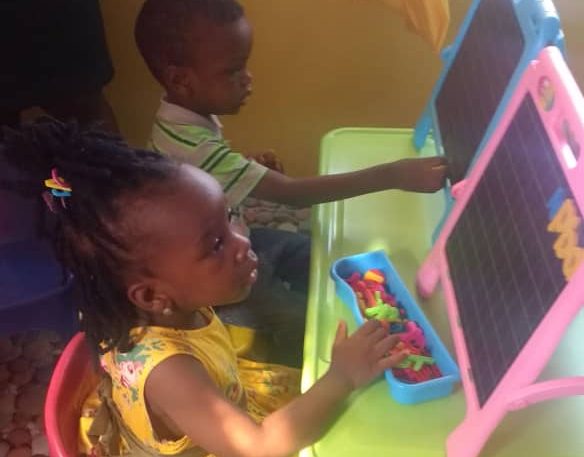
Advantages and Disadvantages of Homeschooling.
Advantages and Disadvantages of Homeschooling in Ghana are important to consider before enrolling your ward into it . Homeschooling is a type of education where parents take on the primary responsibility of teaching their children at home, rather than sending them to a traditional school. There are advantages and disadvantages to this method of education. Homeschooling is an alternative form of education that has been growing in popularity in Ghana. It is a method of education in which parents educate their children at home rather than sending them to traditional schools. While homeschooling can offer several advantages, it also comes with its own set of challenges and limitations.
READ ALSO: Homeschool Help – How to get homeschooling assistance

Advantages and Disadvantages of Homeschooling
There are a lot of advantages and disadvantages of homeschooling in Ghana, of which shall discuss of few such as; ability to to personalize education, ability to provide a safer and more controlled learning environment and the opportunity to spend some good time with the family and Potential For Social Isolation, The lack of access to resources and facilities available in traditional homeschooling, Lack Of Accountability And Oversight For The Quality Of Education Provided, High Level Of Homeschooling requires a high level of organization and self-discipline.
Advantage of Homeschooling
These are some advantages of homeschooling, such as the ability to personalize education, a safer and more controlled learning environment, and the opportunity to spend some quality time with the family.
READ ALSO: How to combine homeschooling with a busy schedule.
Overall, the ability to personalize education is a significant advantage of homeschooling. It allows children to receive a tailored education that meets their individual needs, interests, and strengths, which can lead to a more fulfilling and successful learning experience.
Ability to Personalize Education
One of the key advantages of homeschooling is the ability to personalize education to meet the unique needs and interests of each child. Homeschooling allows parents to create a customized curriculum that is tailored to the learning style and pace of their child. This means that children can move more quickly through subjects they excel at, and take more time to fully understand and master subjects that they struggle with.
Personalized education also allows for a greater emphasis on the child’s interests and passions. Homeschooling parents can choose to incorporate more hands-on learning experiences, field trips, and extracurricular activities that align with their child’s interests. This can help to foster a love of learning and a sense of engagement with the material being taught.
Ability to provide a safer and more controlled learning environment for homeschooling.
Another advantage of homeschooling is the ability to provide a safer and more controlled learning environment for children. In a traditional school setting, children may face a variety of distractions and potential risks, including bullying, peer pressure, and exposure to drugs and violence.
Homeschooling can provide a safer and more controlled learning environment, as parents are able to closely monitor their child’s social interactions and activities. This can help to ensure that children are not exposed to negative influences and can instead focus on their studies and personal growth.
In addition, homeschooling can provide a more flexible and adaptable learning environment, which can be particularly important in times of crisis or uncertainty, such as during a pandemic. Homeschooled children can continue to learn and grow without disruption, even when schools may be closed or have limited in-person learning opportunities.
However, it is important to note that homeschooling may not be suitable for all families, and that parents must take responsibility for ensuring that their child receives a well-rounded education that includes opportunities for socialization, physical activity, and personal development. Parents who choose to homeschool must also ensure that they are providing a safe and nurturing learning environment, and must be prepared to address any challenges or difficulties that may arise.
READ ALSO: NEW YEAR PARENTING RESOLUTIONS YOU SHOULD CONSIDER AS A PARENT
Opportunity To Spend More Quality Time With Family
Homeschooling can be a great opportunity to spend more quality time with your family, as you will be involved in your children’s education and spending more time together at home. Here are some tips for making the most of this time:
-
Create a schedule together
Involve your children in creating a daily schedule that includes time for learning, as well as time for breaks and other activities.
-
Take breaks together
Use breaks in the day to do something fun or relaxing together, such as taking a walk or playing a game.
-
Incorporate family projects
Consider incorporating family projects into your homeschooling curriculum, such as gardening or building a birdhouse, to encourage teamwork and strengthen bonds.
-
Use field trips as learning opportunities
Take advantage of field trips to museums, nature centers, and other educational locations as a chance to learn together and create lasting memories.
-
Make time for one-on-one time
Homeschooling allows for more individualized attention, so make sure to set aside time for one-on-one learning and bonding with each child.
READ ALSO: Homeschooling In Ghana
Flexibility In Terms Of Scheduling And Pacing Lessons
One of the many advantages of homeschooling is the flexibility it offers in terms of scheduling and pacing of lessons. Here are some tips for making the most of this flexibility:
Create a schedule that works for your family: Take into account your family’s daily routines, activities, and preferences when creating a schedule for homeschooling. Be sure to include breaks and downtime to prevent burnout.
Adjust the pace of lessons as needed: Homeschooling allows you to customize the pace of learning to fit your child’s individual needs. If your child is struggling with a particular concept, take the time to review and reinforce it until they are confident.
Take advantage of teachable moments: Homeschooling allows you to take advantage of teachable moments that may arise outside of scheduled lessons. For example, a trip to the grocery store can be turned into a lesson on budgeting and healthy eating.
READ ALSO: Education In Ghana: Everything You Need To Know
Allowing For A More Hands-On And Experiential Approach To Learn
One of the many benefits of homeschooling is the ability to customize the learning experience to fit the needs and interests of the individual child. This often involves a more hands-on and experiential approach to learning that can lead to deeper understanding and greater retention of information. Here are some ways in which homeschooling allows for a more hands-on and experiential approach to learning:
Personalized Learning
Homeschooling allows for a more personalized learning experience, tailored to the needs and interests of each child. This means that parents can choose learning materials and activities that are more engaging and relevant to their child’s individual learning style.
- Flexibility
Homeschooling offers greater flexibility in scheduling and pacing, allowing children to spend more time on subjects that interest them or need more attention. This can also allow for more time to engage in hands-on learning activities and experiments.
- Real-World Experiences
Homeschooling can provide more opportunities for real-world experiences, such as field trips, volunteering, and internships. These experiences can help children see how the concepts they are learning in the classroom apply to the world around them.
- Project-Based Learning
Homeschooling can incorporate more project-based learning, where children work on long-term projects that integrate multiple subjects and require problem-solving and critical thinking skills. These projects often involve hands-on learning and experimentation.
- Multi-Sensory Learning
Homeschooling allows for multi-sensory learning, where children can engage with material using a variety of senses. This can include using manipulatives, visual aids, and audio resources to enhance learning.
- Experimentation and Exploration
Homeschooling can provide more opportunities for experimentation and exploration, allowing children to learn through trial and error. This can include science experiments, art projects, and hands-on activities that encourage children to explore and discover new things.
Overall, homeschooling allows for a more hands-on and experiential approach to learning that can be tailored to the individual needs and interests of the child. By incorporating real-world experiences, project-based learning, and multi-sensory approaches, children can gain a deeper understanding and appreciation for the material they are learning.
Disadvantages of Homeschooling
Homeschooling has become an increasingly popular option for many families around the world, especially in the wake of the COVID-19 pandemic. There are both advantages and disadvantages to homeschooling.
On the other hand, homeschooling can be challenging for parents who may lack teaching experience or may not have the time or resources to fully commit to homeschooling. Socialization opportunities may also be limited, and children may miss out on the benefits of a structured school environment and interaction with peers.
Potential For Social Isolation
Homeschooling, also known as home education, is the practice of educating children at home or in non-traditional settings rather than in a traditional school setting. Although homeschooling can provide many benefits for families, such as increased flexibility, personalized learning, and stronger family relationships, there is a potential for social isolation in homeschooling.

Social isolation is a condition where an individual or group is disconnected from social relationships or experiences a lack of social interaction. In homeschooling, social isolation can occur in a variety of ways. Some of the potential causes of social isolation in homeschooling include:
1. Limited Opportunities for Social Interaction
Homeschooling may limit the opportunities for children to interact with peers, especially if the family lives in a rural area or if there are few homeschooling families in the community. This can lead to feelings of loneliness and isolation for both children and parents.
2. Lack of Exposure to Diverse Perspectives
In traditional schools, children are exposed to a diverse range of perspectives, experiences, and backgrounds. In contrast, homeschooling may limit exposure to diverse perspectives, leading to a narrow worldview and difficulty in relating to others who are different.
3. Limited Access to Extracurricular Activities
Homeschooled children may have limited access to extracurricular activities such as sports, music, or drama clubs. These activities are important for socialization and can help children develop social skills and build friendships.
1. Parental Control
In homeschooling, parents have complete control over their children’s education, which can result in limiting their exposure to different ideas and perspectives. This can lead to a lack of critical thinking skills and difficulty adapting to new situations.
2. Lack of Peer Pressure
Peer pressure can be a positive force in encouraging children to try new things, take risks, and form relationships. Homeschooling may limit exposure to peer pressure, leading to a lack of motivation to explore new experiences.
3. Difficulty Meeting Developmental Needs
Children have different developmental needs at different stages of their lives. Homeschooling may not provide the social opportunities necessary for children to meet their developmental needs. This can lead to difficulties in socialization, communication, and relationship building.
4. Increased Dependence on Family Relationships
Homeschooling may increase dependence on family relationships for social interaction. While strong family relationships are important, it is also essential for children to learn how to interact with people outside of their family.
The lack of access to resources and facilities available in traditional homeschooling.
One of the disadvantages of homeschooling is the potential lack of access to resources and facilities that are available in a traditional school setting. Public schools often have access to a wide range of resources and facilities, such as libraries, laboratories, sports facilities, and extracurricular programs, that may not be available to homeschooling families.
In addition, homeschooling families may need to purchase their own curriculum materials, which can be expensive, and may not have access to specialized resources, such as teachers with advanced degrees or specialized training in certain subjects.
Advantages of homeschooling include the ability to tailor education to the specific needs and interests of the child, the flexibility to set your own schedule, and the opportunity for more personalized attention from the parent-teacher. Homeschooling can also provide a safer and more comfortable learning environment for some children, as well as the ability to foster closer family relationships.
On the other hand, homeschooling can be challenging for parents who may lack teaching experience or may not have the time or resources to fully commit to homeschooling. Socialization opportunities may also be limited, and children may miss out on the benefits of a structured school environment and interaction with peers.
Ultimately, whether homeschooling is the right choice for your family depends on your individual circumstances and preferences. It is important to carefully weigh the advantages and disadvantages before making a decision
Ability to provide a safer and more controlled learning environment for homeschooling
Another advantage of homeschooling is the ability to provide a safer and more controlled learning environment for children. In a traditional school setting, children may face a variety of distractions and potential risks, including bullying, peer pressure, and exposure to drugs and violence.
READ ALSO: Meaning of Preschool
Lack Of Accountability And Oversight For The Quality Of Education Provided
Homeschooling is a form of education where parents or guardians are responsible for their children’s education outside of a traditional school setting. While homeschooling can be a viable option for many families, it is important to ensure that the education being provided is of high quality and meets certain standards.
One potential issue with homeschooling is the lack of accountability and oversight for the quality of education being provided. Unlike traditional schools, which are subject to regular inspections and evaluations by government agencies, homeschooling is generally not subject to the same level of scrutiny.
To address this issue, some states in the United States require homeschooling parents to register with the local school district or state education agency and provide regular updates on their child’s progress. These requirements may include submitting lesson plans, keeping attendance records, and undergoing periodic evaluations by certified teachers or educational professionals.
Another approach to ensuring the quality of homeschooling education is to provide support and resources for homeschooling families. This can include access to curriculum materials, teacher training programs, and educational resources such as libraries and museums.
Ultimately, the key to ensuring the quality of education in homeschooling is to strike a balance between accountability and support. By providing oversight and resources for homeschooling families, we can help ensure that children receive a high-quality education regardless of where they are learning.
Requires significant Financial And Time Investment For Parents.
Homeschooling is a form of education where parents or guardians are responsible for their children’s education outside of a traditional school setting. While homeschooling can offer many benefits, it is important to recognize that it can require significant financial and time investments from parents.
Firstly, homeschooling parents may need to purchase curriculum materials, textbooks, and other educational resources, which can be expensive. In addition, parents may need to invest in technology and other tools to facilitate online learning and educational activities.
Secondly, homeschooling requires a significant time commitment from parents. They are responsible for planning and delivering lessons, grading assignments, and providing feedback to their children. This can be particularly challenging for parents who work full-time or have other commitments that limit their availability.
A high level of homeschooling requires a high level of organization and self-discipline
Homeschooling requires a high level of organization and self-discipline on the part of both parents and students. Unlike traditional schools, where teachers provide structure and accountability, homeschooling parents must take on these responsibilities themselves.
Organizing a homeschooling program involves planning and implementing a curriculum, scheduling daily and weekly lessons, and setting academic goals for the year. This requires careful planning, attention to detail, and a commitment to staying on track.
Self-discipline is also a key factor in homeschooling success. Homeschooling parents must be motivated and self-directed to keep up with the demands of teaching and monitoring their children’s progress. They must also instill self-discipline in their children, teaching them the importance of staying on task and meeting academic goals.
READ ALSO: How To Combine Homeschooling With Busy Schedules
Conclusion
Homeschooling can provide a safer and more controlled learning environment, as parents are able to closely monitor their child’s social interactions and activities. This can help to ensure that children are not exposed to negative influences and can instead focus on their studies and personal growth.


 English
 Afrikaans
 Albanian
 Amharic
 Arabic
 Armenian
 Azerbaijani
 Basque
 Belarusian
 Bengali
 Bosnian
 Bulgarian
 Catalan
 Cebuano
 Chichewa
 Chinese (Simplified)
 Chinese (Traditional)
 Corsican
 Croatian
 Czech
Czech Danish
 Dutch
Dutch Esperanto
 Estonian
 Filipino
 Finnish
 French
 Frisian
 Galician
 Georgian
 German
 Greek
Greek Gujarati
 Haitian Creole
 Hausa
Hausa Hawaiian
 Hebrew
 Hindi
Hindi Hmong
Hmong Hungarian
 Icelandic
 Igbo
Igbo Indonesian
 Irish
Irish Italian
 Japanese
 Javanese
 Kannada
 Kazakh
 Khmer
Khmer Korean
 Kurdish (Kurmanji)
 Kyrgyz
 Lao
Lao Latin
Latin Latvian
 Lithuanian
 Luxembourgish
 Macedonian
 Malagasy
 Malay
Malay Malayalam
 Maltese
 Maori
Maori Marathi
 Mongolian
 Myanmar (Burmese)
 Nepali
 Norwegian
 Pashto
 Persian
 Polish
 Portuguese
 Punjabi
 Romanian
 Russian
 Samoan
 Scottish Gaelic
 Serbian
 Sesotho
 Shona
Shona Sindhi
 Sinhala
 Slovak
 Slovenian
 Somali
 Spanish
 Sudanese
 Swahili
 Swedish
 Tajik
Tajik Tamil
Tamil Telugu
 Thai
Thai Turkish
 Ukrainian
 Urdu
Urdu Uzbek
Uzbek Vietnamese
 Welsh
Welsh Xhosa
Xhosa Yiddish
 Yoruba
 Zulu
Zulu