

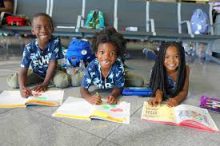
Building A Strong Foundation: Academics Preparation In Preschool.
Academic preparation in Preschool and Early childhood education is crucial in building a strong foundation for future academic success. Children’s early years are critical for developing language, cognitive, and social-emotional skills, which are the foundation for future learning. Preschool is an ideal environment for fostering children’s development, including their academic preparation. In this article, we will discuss the importance of academic preparation in preschool and provide practical strategies for parents and educators to support children’s academic readiness.
READ ALSO: Homeschooling in Ghana

Academic Preparation in Preschool
Preschool is a time when children begin to develop academic skills that will serve as a foundation for future learning. Academic readiness refers to a child’s ability to meet the academic demands of school. This includes skills such as letter recognition, phonics, math concepts, and critical thinking. A strong foundation in these areas sets children up for success in kindergarten and beyond.
Research has shown that children who enter kindergarten with strong academic skills are more likely to succeed in school and graduate from high school (Duncan & Magnuson, 2013). Academic readiness is also associated with higher levels of academic achievement, better social skills, and fewer behavior problems (National Institute for Early Education Research, 2013).
Moreover, academic preparation in preschool can help to close the achievement gap between children from different socioeconomic backgrounds. Children from low-income families are less likely to have access to high-quality preschool programs and are more likely to start school behind their peers. By providing early academic preparation, preschool can help to level the playing field and ensure that all children have the tools they need to succeed academically.
READ ALSO: Education in Ghana: Everything You Need to Know
Strategies for Academic Preparation in Preschool
Reading Aloud
Reading aloud to children is one of the most effective ways to promote early literacy skills. Reading aloud helps children to develop phonemic awareness, which is the ability to hear and manipulate sounds in language. This skill is crucial for learning to read and write. It also helps children to develop vocabulary, comprehension skills, and a love of reading.
Parents and educators can make reading aloud a daily habit by setting aside time each day for reading. They can also encourage children to interact with the text by asking questions and making connections to their own experiences.
Hands-on Learning
Hands-on learning is an effective way to help children learn math concepts. It involves using concrete materials such as blocks, puzzles, and manipulatives to teach math concepts such as counting, sorting, and measuring. Hands-on learning helps children to develop a deep understanding of math concepts and makes learning fun and engaging.
Parents and educators can incorporate hands-on learning into daily activities such as cooking, building, and playing games. They can also provide children with opportunities to explore and experiment with different materials to develop their problem-solving skills.

Play-Based Learning
Play-based learning is an effective way to promote social-emotional development and critical thinking skills. Play-based learning involves providing children with opportunities to explore and experiment with different materials and ideas. It helps children to develop creativity, curiosity, and problem-solving skills.
READ ALSO: Meaning of Preschool
Parents and educators can incorporate play-based learning into daily activities by providing children with open-ended materials such as blocks, playdough, and art supplies. They can also encourage children to engage in imaginative play and provide opportunities for children to work together to solve problems.
Language Development
Language development is crucial for academic success. Children who have strong language skills are better able to learn to read and write. They are also better able to communicate their thoughts and ideas. Parents and educators can promote language development by providing children with opportunities to talk, listen, and interact with others.
They can also model good language skills by speaking clearly and using rich vocabulary. They can ask open-ended questions and encourage children to express their thoughts and ideas. They can also read books, sing songs, and engage in other activities that promote language development.
Conclusion
Academic preparation in preschool plays an essential role in laying the foundation for a child’s future academic success. Preschool education provides children with a supportive and stimulating environment that helps them develop important cognitive, social, and emotional skills. Through play-based activities, structured learning, and social interactions, preschoolers can enhance their language development, critical thinking, creativity, and problem-solving abilities. By focusing on academics, preschools can prepare children for kindergarten and beyond, helping them to develop a love for learning that will serve them throughout their academic journey. Therefore, providing quality academic preparation in preschool is crucial for building a strong educational foundation for young children, setting them up for success in their future academic and personal lives.


 English
 Afrikaans
 Albanian
 Amharic
 Arabic
 Armenian
 Azerbaijani
 Basque
 Belarusian
 Bengali
 Bosnian
 Bulgarian
 Catalan
 Cebuano
 Chichewa
 Chinese (Simplified)
 Chinese (Traditional)
 Corsican
 Croatian
 Czech
Czech Danish
 Dutch
Dutch Esperanto
 Estonian
 Filipino
 Finnish
 French
 Frisian
 Galician
 Georgian
 German
 Greek
Greek Gujarati
 Haitian Creole
 Hausa
Hausa Hawaiian
 Hebrew
 Hindi
Hindi Hmong
Hmong Hungarian
 Icelandic
 Igbo
Igbo Indonesian
 Irish
Irish Italian
 Japanese
 Javanese
 Kannada
 Kazakh
 Khmer
Khmer Korean
 Kurdish (Kurmanji)
 Kyrgyz
 Lao
Lao Latin
Latin Latvian
 Lithuanian
 Luxembourgish
 Macedonian
 Malagasy
 Malay
Malay Malayalam
 Maltese
 Maori
Maori Marathi
 Mongolian
 Myanmar (Burmese)
 Nepali
 Norwegian
 Pashto
 Persian
 Polish
 Portuguese
 Punjabi
 Romanian
 Russian
 Samoan
 Scottish Gaelic
 Serbian
 Sesotho
 Shona
Shona Sindhi
 Sinhala
 Slovak
 Slovenian
 Somali
 Spanish
 Sudanese
 Swahili
 Swedish
 Tajik
Tajik Tamil
Tamil Telugu
 Thai
Thai Turkish
 Ukrainian
 Urdu
Urdu Uzbek
Uzbek Vietnamese
 Welsh
Welsh Xhosa
Xhosa Yiddish
 Yoruba
 Zulu
Zulu